
Why He Matters
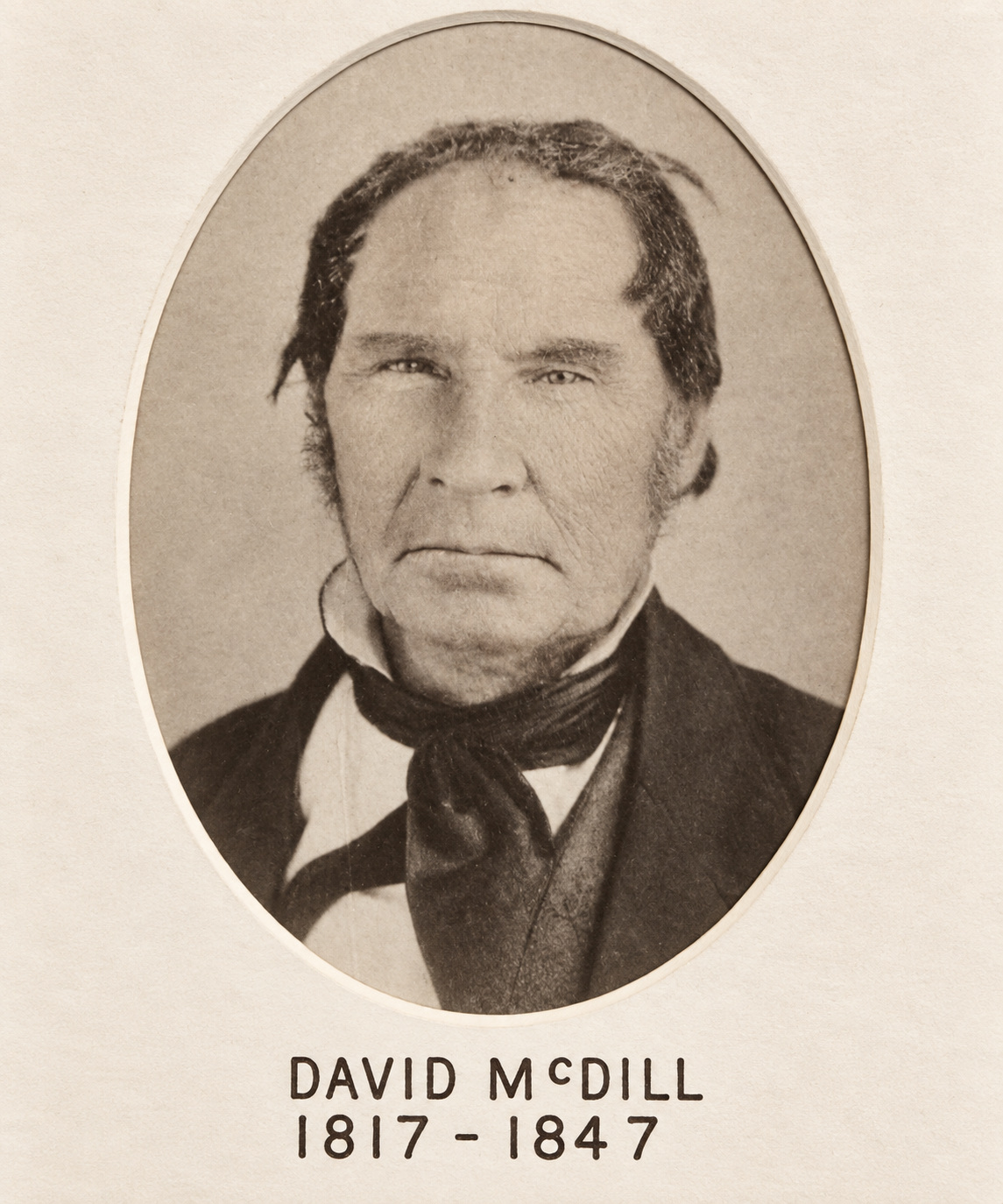
Rev. David McDill was not simply a minister who lived in an antislavery community. Nineteenth-century sources describe him as one of the leaders of the antislavery side in the Associate Reformed Synod of the West. From Hamilton, he helped shape church action against slavery, used religious print to carry reform arguments to a wider audience, and remained identified with the cause for decades.
A Leader in the Church's Antislavery Action
McDill's 1874 biography places him near the center of the Associate Reformed Church's early debate over slavery. It describes him as one of the leaders on the antislavery side and connects him to the church's committee work beginning in 1826. The 1827 committee report argued that slavery as practiced in the United States was contrary to the Law and Gospel of God and called on presbyteries and sessions to act.
Later synod actions went further. They affirmed the original equality of mankind, called for the removal of involuntary slavery when legally possible, condemned buying and selling enslaved people for gain, opposed the separation of husbands and wives and parents and children, and urged church members to aid people moving toward freedom.
The Slavery Debate Helped Launch the Christian Intelligencer
The relationship between McDill's antislavery work and his publishing career is unusually direct. His biography says the slavery debate at the Synod of the West in 1828 was one of the immediate causes behind launching a new monthly religious paper. On the journey home from synod, McDill and other ministers agreed that an organ should be created in which the slavery question could be discussed. McDill wrote the prospectus for the new publication.
The Christian Intelligencer began publication in Hamilton in January 1829 with McDill as editor. His biographer later wrote that the early volumes contained extensive biblical argument on slavery by McDill and other contributors. This makes the paper an important part of Hamilton's early antislavery print culture.
What We Can Prove About His Writing
McDill was a prolific editor and writer, and his biography preserves selections from his published work. It also reproduces an extended 1832 antislavery text titled “Letter IV. On Slavery” within the chapter devoted to his antislavery activity. The project treats the text as part of the documented church and print campaign against slavery while continuing to distinguish corporate synodical documents from writings that can be assigned to McDill individually.
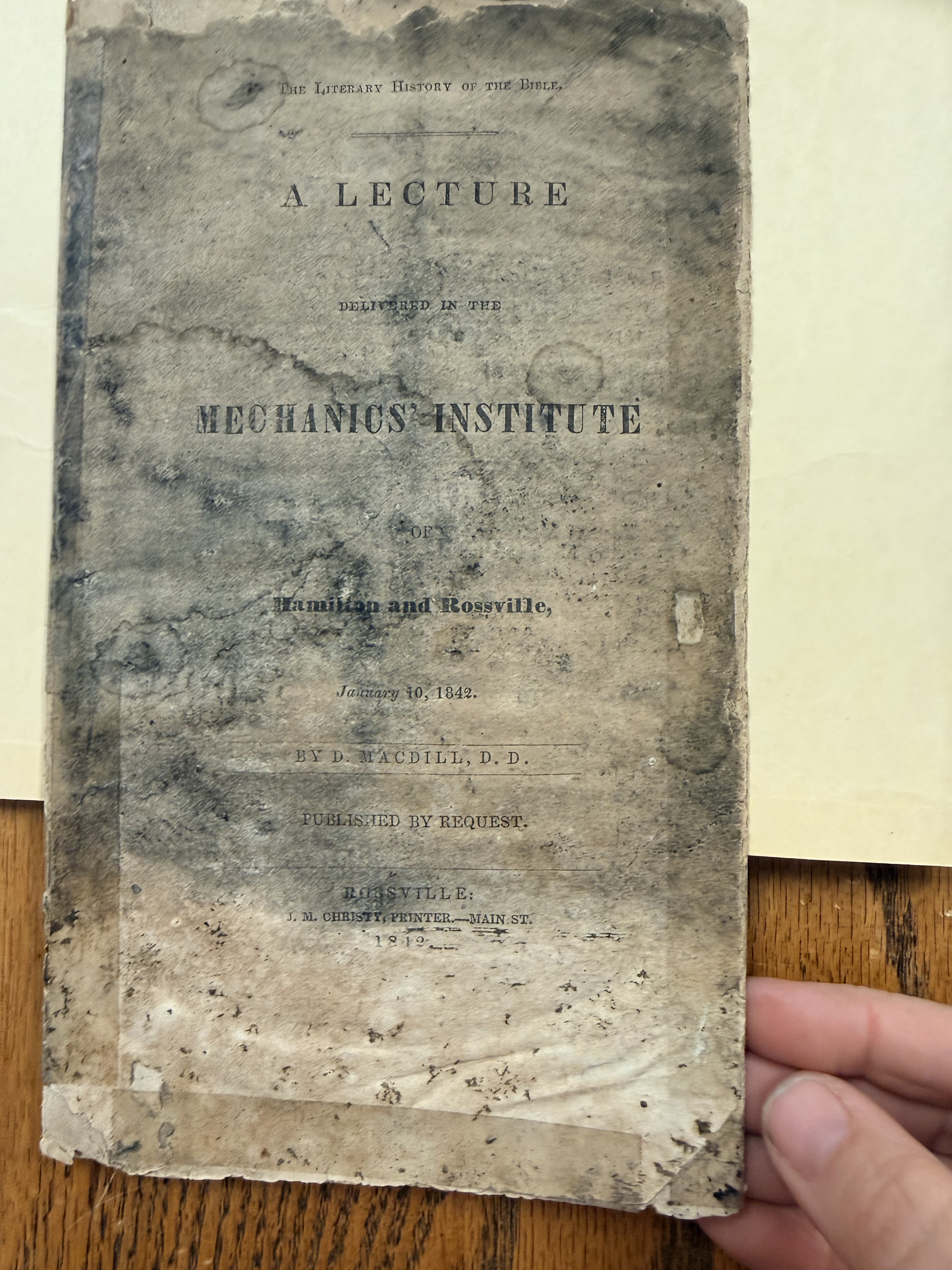
Research note: The project has not yet identified a separately published antislavery pamphlet bearing McDill's name. Two stand-alone McDill pamphlets are documented, but they concern other subjects: his 1830 address on the Sabbath mails and his 1842 lecture The Literary History of the Bible. Until an antislavery pamphlet is located, the website describes McDill as an antislavery writer, editor, and church leader rather than claiming that he published antislavery pamphlets.
McDill in His Own Words
In an autobiographical sketch dated May 23, 1866, McDill recalled the beginning of his Hamilton ministry: “In the year 1817 I was licensed, and commenced preaching in Hamilton, Ohio, in the month of October, where I remained more than thirty years, during which time I edited the Christian Intelligencer for eighteen years.” The sketch was prepared at the request of Dr. Monfort and was later reprinted in the Evangelical Repository and United Presbyterian Review in 1870.
McDill also described why his family left South Carolina for Ohio in 1806. His father, also named David McDill, rejected purchasing enslaved laborers and moved the family west. The younger McDill's biographer later wrote that he grew up to despise the system of slavery and devoted much of his energy to opposing it.
A Lifelong Antislavery Commitment
McDill's biographer acknowledged that some later critics considered him too conservative in political strategy, but he rejected the idea that McDill was proslavery. He described McDill as a man who had labored for years to make voluntary slaveholding a matter of church discipline and who rejoiced at emancipation during the Civil War. The distinction is important: McDill did not embrace every political abolitionist strategy, but the nineteenth-century evidence consistently places him on the antislavery side of the church's struggle.
A Public Lecture at the Mechanics' Institute
A surviving printed pamphlet documents McDill as a public lecturer in Hamilton and Rossville in 1842. The title page identifies The Literary History of the Bible: A Lecture Delivered in the Mechanics' Institute of Hamilton and Rossville, January 10, 1842, by D. MacDill, D.D. It was “Published by Request” and printed in Rossville by J. M. Christy on Main Street.
Martha Beckett Remembered McDill
In a November 28, 1916 Hamilton Evening Journal reminiscence, 92-year-old Mrs. Martha Beckett recalled early United Presbyterian worship and Rev. David McDill's services. Her recollection was published nearly a century after the congregation's founding, so the project uses it as living-memory testimony alongside earlier records, not in place of them.
Network Connections
McDill had a documented personal and educational connection with Rev. David Monfort. The two were classmates at Transylvania University and developed a friendship that continued after their theological paths diverged. His antislavery work also places him within a larger western Presbyterian and Associate Reformed reform network that included ministers, editors, church courts, and congregations across Ohio and neighboring states.
Research Caution
McDill's antislavery leadership is well documented. Direct Underground Railroad participation is a separate question. This project does not treat antislavery theology or church reform by itself as proof that McDill personally sheltered or transported freedom seekers.
Principal source: Rev. Marion Morrison, Life of the Rev. David McDill, D.D. (Philadelphia, 1874), especially Chapter III, “Dr. M'Dill as an Editor and Writer,” and Chapter IV, “Dr. M'Dill as an Anti-Slavery Man,” pp. 57-74.