
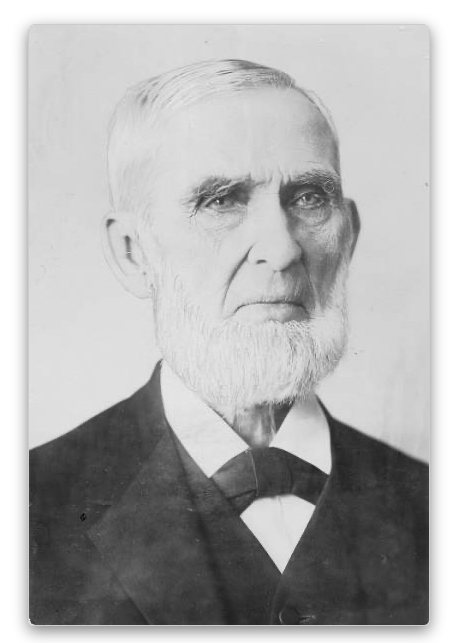
Mark Campbell McMaken
McMaken's March 23, 1895 interview with Wilbur H. Siebert is the cornerstone surviving testimony for Hamilton's Underground Railroad operations. He described two cases in which he personally participated and also explained the city's correspondence and routing network.
What McMaken Remembered
McMaken described an interconnected Hamilton antislavery community centered in the city's Associate Reformed and Presbyterian circles. He named John Woods and “Rigden” as correspondence contacts and Alfred Anderson as a trusted operator in movement and concealment.
Surviving Portraits of McMaken
The project now preserves two different surviving images of Mark Campbell McMaken. The frontal portrait from the Ohio History Connection / Siebert materials remains the page's main identification image. A second image, labeled as a negative of McMaken circa 1885, appears to be a different photographic exposure rather than a simple crop of the same portrait.
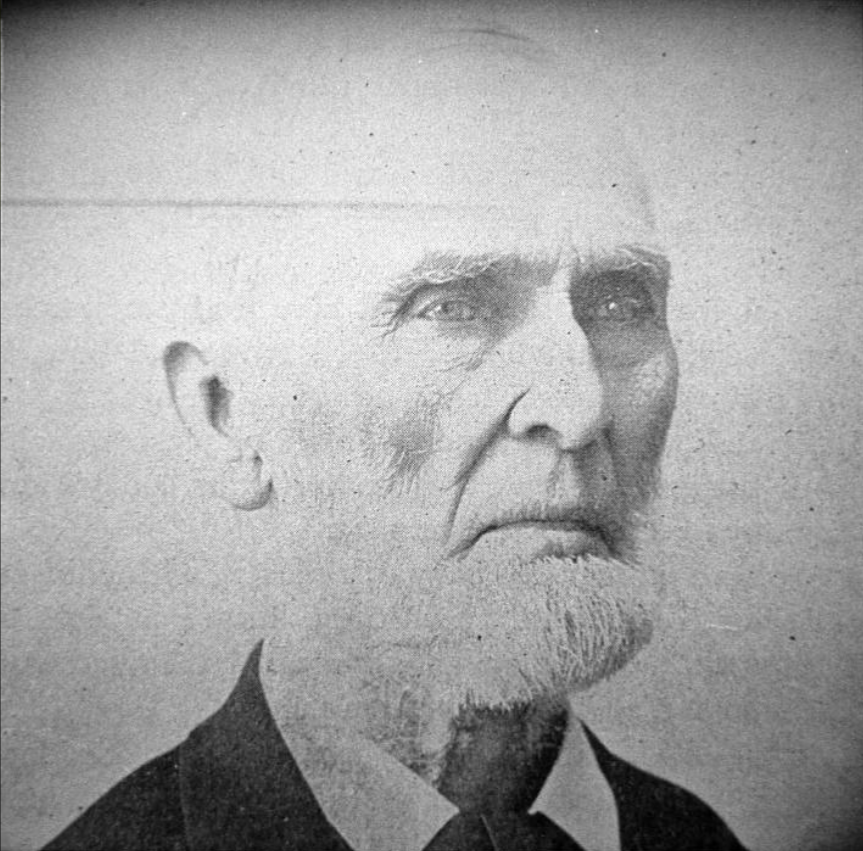
Note: These images appear to represent the same man but not the same exact photograph. The project preserves both as separate visual records of McMaken.
Two Cases
McMaken explicitly said the two episodes he described were the only two in which he personally had a part. His account nevertheless describes a larger recurring system of letters, lookout notices, concealment, legal assistance, recognition procedures, and onward escort.
Conflict with Marshal Elliott Before the 1854 Case
A contemporary Hamilton Intelligencer article dated August 4, 1853 records McMaken's involvement in an effort brought through Hamilton's mayor and city council to have Marshal Elliott removed from office. The episode occurred nearly a year before the July 1854 freedom seeker case.
The article is important because it establishes that McMaken and Elliott already had a documented public conflict before the later arrest and habeas corpus proceeding. The surviving evidence does not establish that the 1853 dispute concerned slavery, and this project does not infer that motive without additional documentation.
Source: Hamilton Intelligencer, August 4, 1853. Project research also notes that Hamilton City Council proceedings from July 18 through August 5, 1853 were later reproduced in the paper under the heading “The Marshal of Hamilton.”
How We Use His Testimony
McMaken was both a direct participant and a later witness. His 1895 testimony is therefore read alongside contemporary 1854 newspaper evidence. Where the sources agree, they strongly corroborate one another; where they differ, the differences help show how memory changed over four decades.