
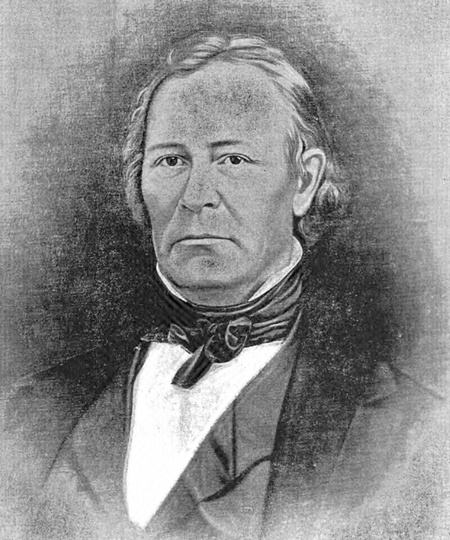
John Woods
Attorney, former congressman, civic leader, industrial promoter, and one of the most important documented communication contacts in McMaken's account of Hamilton Underground Railroad activity.
Why Woods Matters
McMaken stated that Underground Railroad correspondence was generally directed to John Woods and “Rigden.” This places Woods at the communication center of a broader Hamilton assistance network rather than only in the city's political and business history.
Network Connections
Woods was connected to Hamilton's Associate Reformed congregation and to a dense civic, industrial, legal, and political network. His documented family connection to Probate Judge Thomas H. Wilkins adds important context to the July 1854 proceeding, while not proving that Woods directed Wilkins or controlled the legal strategy.
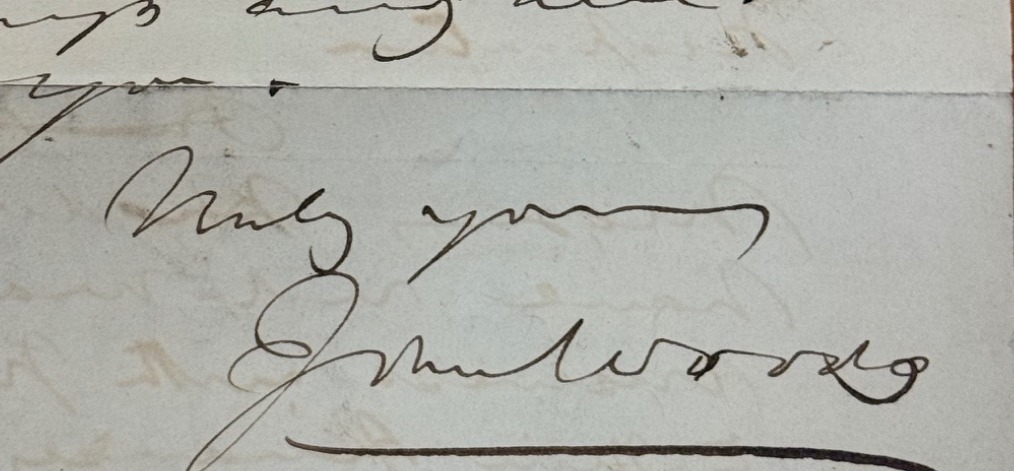
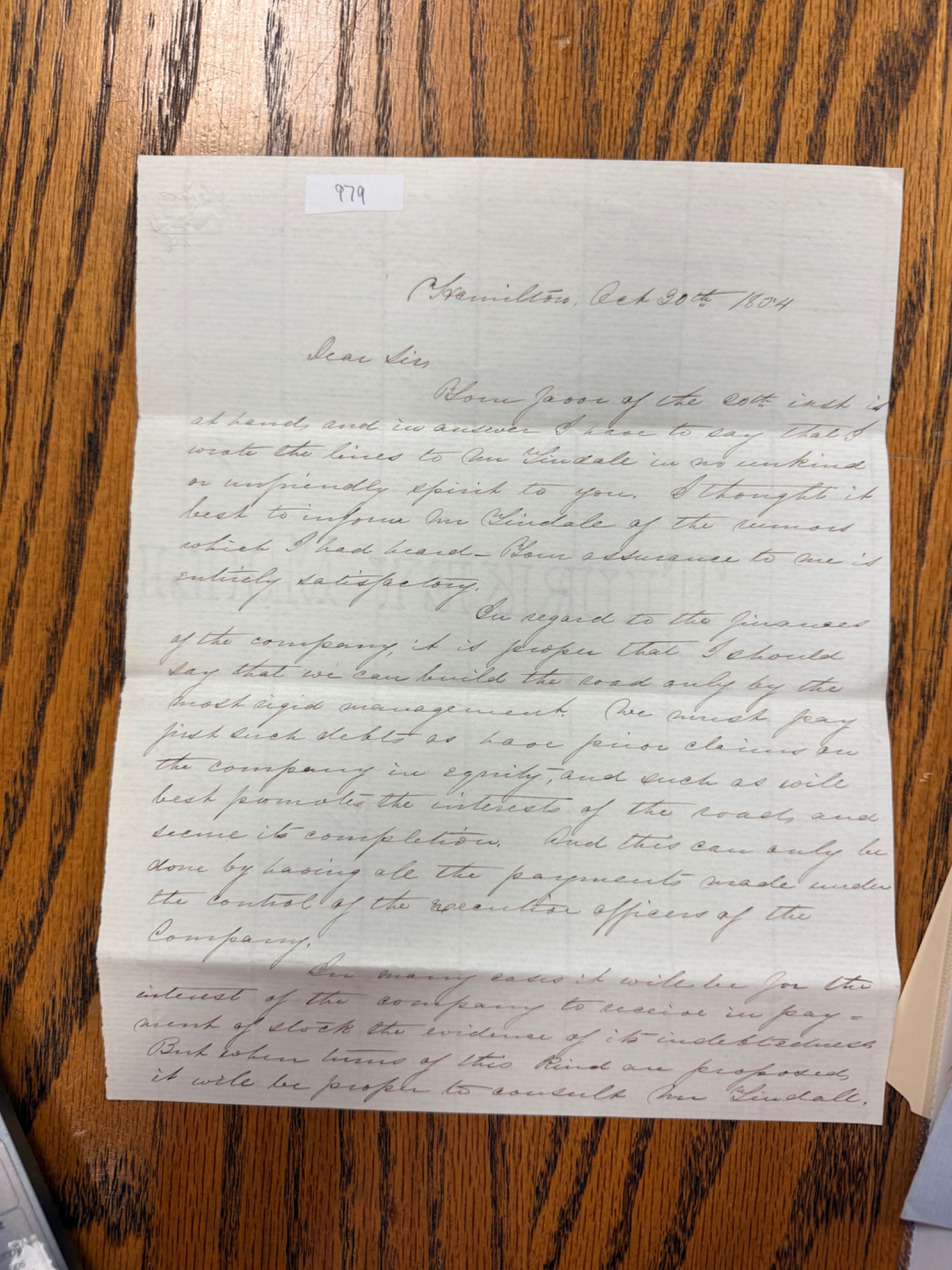
Woods in His Own Hand
Material photographed at the Butler County Historical Society adds a direct visual record of Woods's handwriting and signature. A Hamilton letter dated October 20, 1854 discusses railroad company obligations, contracts, creditors, and work on the line toward Connersville. The letter is important evidence for Woods's transportation and business role in the same year as the July 1854 freedom seeker case. It is not, by itself, Underground Railroad correspondence.
Church Trustee in 1853
Later United Presbyterian histories preserved at the Butler County Historical Society record that on January 27, 1853 an additional lot was purchased for the Associate Reformed congregation by trustees John McDaniel, Robert Beckett, and John Woods. This adds specific documentary support for Woods's institutional leadership in McDill's congregation shortly before the 1854 case.
Martha Beckett's 1916 Reminiscence
A November 28, 1916 Hamilton Evening Journal article published the memories of 92-year-old Mrs. Martha Beckett. Her age, February 1824 birth reference, Beckett family identity, and other project records align with Martha Woods Beckett, John Woods's daughter. The reminiscence preserves childhood memories of the United Presbyterian congregation and Rev. David McDill, along with a reference to her childhood home at Second and Ludlow streets.
Evidence Boundary
The project distinguishes what McMaken directly reported from later inference. Woods is documented as a principal correspondence contact. His exact property role, the precise location where correspondence was received, and his personal actions in the July 1854 rescue remain separate research questions.