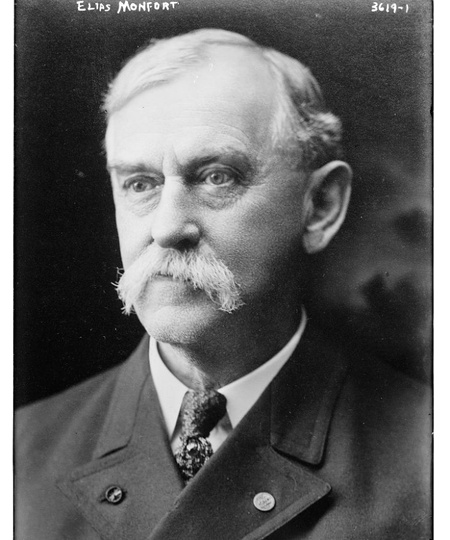
Portrait source: Representative Citizens of Ohio; Memorial-Biographical (1917). Public domain.
Presbyterian Press • Historical Memory • Civil War Veteran
Elias Riggs Monfort
1842–1920
Civil War veteran, lawyer, editor of The Herald and Presbyter, and a later contact specifically recommended to Wilbur H. Siebert for additional Underground Railroad information.
Elias Riggs Monfort belonged to a Presbyterian family deeply tied to Hamilton and the wider Cincinnati region. After Civil War service and legal training, he became editor of The Herald and Presbyter, giving him access to an important stream of church memory and correspondence.
Connection to Siebert
In 1892, John I. Covington specifically recommended Elias Riggs Monfort to Wilbur H. Siebert as someone who could provide additional Underground Railroad information. That makes him important to the later preservation and transmission of Hamilton's Underground Railroad memory.
The Young Soldier: 1861 Discharge
An original military discharge documents Elias R. Monfort at the beginning of the Civil War. It identifies him as a private in Company A of the 75th Ohio Volunteer Infantry, enrolled June 23, 1861, and discharged October 5, 1861 under a special order from Ohio Adjutant General C. P. Buckingham.
The document also preserves a rare physical and biographical description of the nineteen-year-old Monfort: born in Greensburg, Indiana, about 5 feet 9¾ inches tall, fair complexion, gray eyes, dark brown hair, and occupation listed as “student.”
Source: Military discharge of Elias R. Monfort, October 5, 1861. Hanover College Archives. View the discharge →
Wounded at Gettysburg
A Western Union telegram sent from Gettysburg on July 6, 1863 notified Rev. Joseph Glass Monfort that his son Elias had been severely wounded and asked the family to come immediately. The document preserves the moment the war reached the Monfort family as an urgent personal crisis.
Source: Telegram to Rev. J. G. Monfort from J. W. Monfort, July 6, 1863, Gettysburg, Hanover College Archives. View the telegram →
Evidence Boundary
This page does not claim that Elias personally participated in antebellum Underground Railroad operations. His significance here is his family network, editorial role, and documented place in the later historical chain that fed information to Siebert.
Primary Sources • Hanover College Archives
In His Own Words: The Monfort Civil War Letters
Elias Riggs Monfort's surviving Civil War correspondence provides more than a window into everyday Civil War life. The letters help document the transition from the antebellum antislavery world into emancipation. Elias wrote about enslaved people reaching Union lines, attitudes toward the Emancipation Proclamation, race, military service, and the meaning of Ohio as a place associated with freedom. Read together, the letters help place Hamilton's earlier antislavery and Underground Railroad story within the larger national movement toward emancipation.
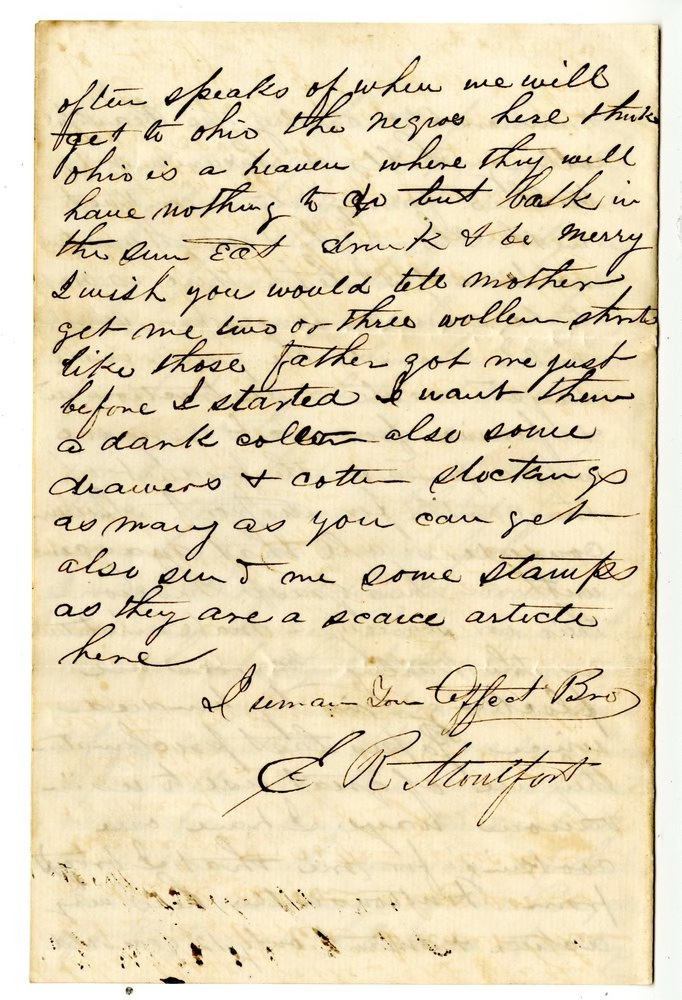
“the negroes here think Ohio is a heaven where they will have nothing to do but balk in the sun eat drink & be merry.”
Elias Riggs Monfort to Maggie Monfort, July 27, 1862
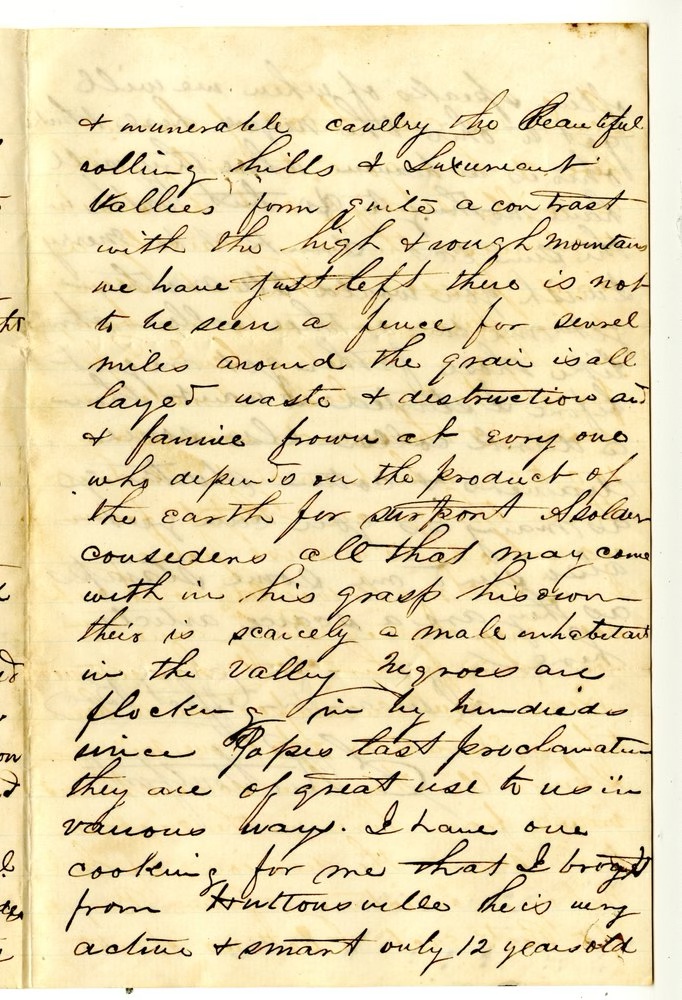
In the same letter, Monfort described enslaved people “flocking in by hundreds” toward Union lines and wrote of a 12-year-old Black boy in his camp who often spoke of reaching Ohio. The passage is valuable not because it gives us a literal definition of freedom, but because it captures a contemporary perception of Ohio as a place beyond slavery and within sight of a different life.
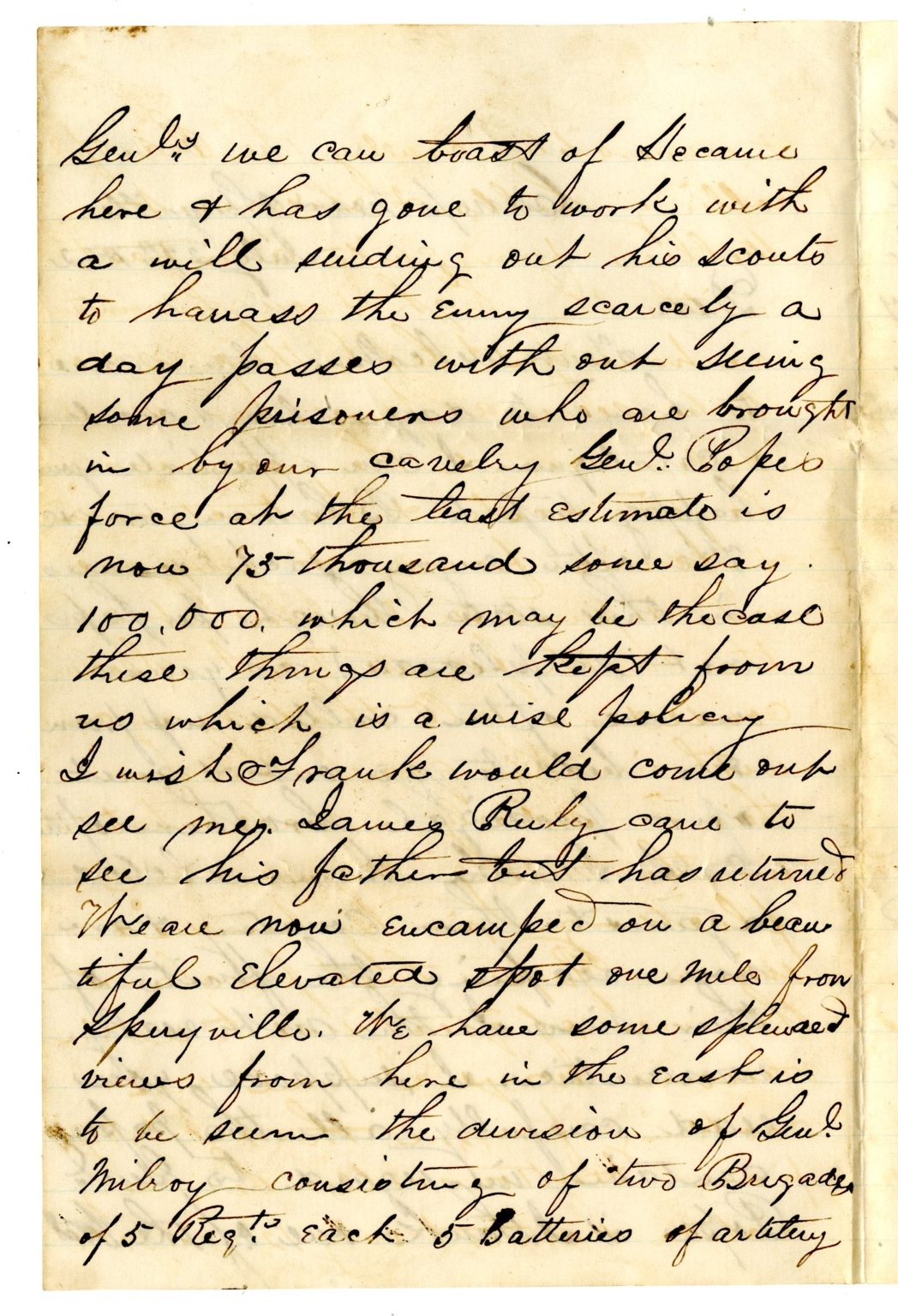
Original manuscript from Hanover College Archives
Reproduced with permission of Hanover College. Credit: Hanover College Archives, Elias Riggs Monfort Papers.
Page 1 of 3Page 2 of 3Page 3 of 3. This page contains the “Ohio is a heaven” passage.
Monfort describes enslaved people arriving at Union lines in large numbers and writes about a young Black boy serving as his cook who repeatedly talked about going to Ohio. The letter is especially valuable because it captures emancipation-era events through the language, assumptions, and perspective of a white Union officer at the time.
This letter records strong reaction among soldiers to the Emancipation Proclamation, including men resigning from service. It provides direct evidence of how contested emancipation remained even among people fighting for the Union.
Monfort again discusses the proclamation and the response of soldiers around him. Read alongside the January letter, it shows the complexity of attitudes toward slavery, race, war, and emancipation within the Union cause.
In a letter to his son, Joseph Glass Monfort suggests that Elias might obtain a field officer's position in a Black regiment. The letter places the Monfort family directly inside the rapidly changing military and racial landscape of 1863.
An original discharge records Elias as a nineteen-year-old student serving as a private in Company A, 75th Ohio Volunteer Infantry, and preserves his birthplace and physical description.
A Western Union telegram to Rev. Joseph Glass Monfort reported that Elias had been severely wounded and urged the family to come immediately. It is a vivid family document from the aftermath of Gettysburg.
Hanover College provides the Monfort Civil War letters online, including transcriptions and links to manuscript images. Readers can browse the correspondence chronologically and follow Elias's experience for themselves.
Evidence caution: These Civil War letters are cultural, biographical, and emancipation-era evidence. They illuminate the transition out of the antebellum world and help readers understand slavery, freedom, race, war, and the meaning of Ohio during emancipation. They do not by themselves establish Elias Riggs Monfort as an Underground Railroad operative.