
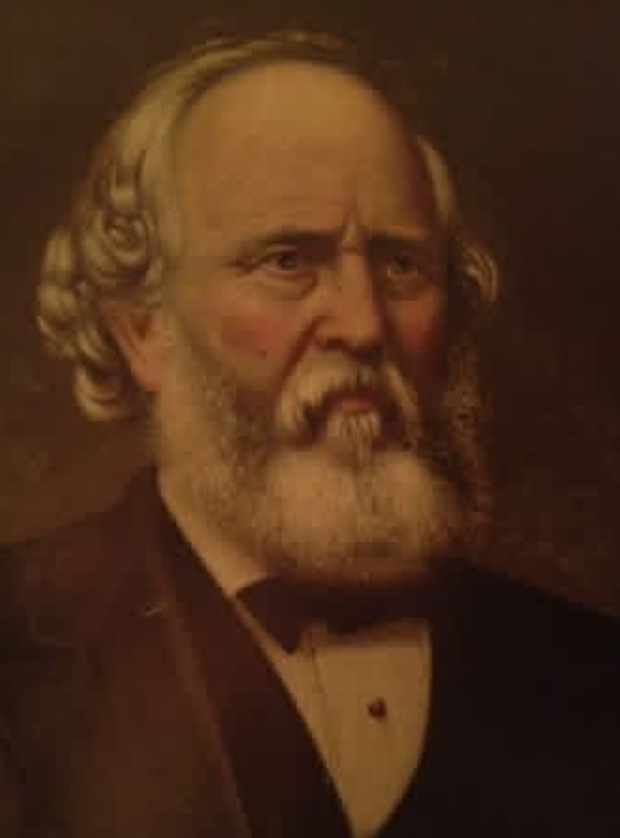
Rev. Joseph Glass Monfort
Presbyterian minister, Miami University graduate, editor, and denominational leader whose life connected Hamilton's First Presbyterian Church, the Miami University antislavery circle, the Presbyterian press, and the Monfort family network.
First Presbyterian Church of Hamilton
Joseph Glass Monfort was directly connected to First Presbyterian Church of Hamilton and Rossville. After his father, Rev. Francis Monfort, left the Hamilton congregation in September 1837, Joseph supplied the church for about six months, through April 1838. A Miami University alumni catalogue also records him as pastor of the Presbyterian churches at Hamilton in 1838.
This places Joseph personally in the pulpit of the Hamilton congregation that would later be served by Rev. Thomas Ebenezer Thomas.
Hamilton Roots
Joseph was the son of Rev. Francis Monfort and Sophia Glass Monfort. He grew up in Carlisle Station and Hamilton while his father ministered in the area, taught for a time in Hamilton, and graduated from Miami University in Oxford in 1834 before theological study at Hanover, Indiana.
Portrait and Source Trail
The project is now using a portrait of Joseph Glass Monfort traced through National Pike Chapter DAR to the National Society Daughters of the American Revolution's Lineage Book No. 4. In the DAR post, Joseph Glass Monfort is identified as the ninth picture in the family group associated with Hannah Louise Monfort Burtis, a granddaughter of Joseph Glass Monfort.
This source trail strengthens the identification and provides a practical source note for public interpretation while the project continues to seek the earliest reproducible version of the portrait.
Miami University and the Antislavery Presbyterian Network
Joseph's importance extends beyond his brief Hamilton pastorate. He and Thomas Ebenezer Thomas graduated from Miami University in 1834, the same year the Miami University Anti-Slavery Society was organized. Historian James H. Rodabaugh identifies Thomas and Monfort among the former Miami students who carried President Robert Hamilton Bishop's Presbyterian reform and antislavery program forward in southern Ohio.
Rodabaugh specifically notes that Monfort later edited an antislavery church paper, The Presbyter, and places him within the southern Ohio group that spent decades pressing the Presbyterian Church toward an explicit antislavery position. This gives the project a strong published basis for treating Joseph as part of the wider Presbyterian antislavery movement, while still distinguishing antislavery leadership from direct Underground Railroad operation.
Source: James H. Rodabaugh, “Miami University, Calvinism, and the Anti-Slavery Movement,” Ohio Archaeological and Historical Quarterly. Read source →
Editor and Church Leader
In 1855 Joseph became editor of the Presbyterian of the West in Cincinnati, later renamed The Presbyter. He became an important advocate of reunion between the Old School and New School Presbyterian branches and served on the Joint Committee on Reunion that helped produce the 1869 reunion.
June 3, 1863: Black Military Service
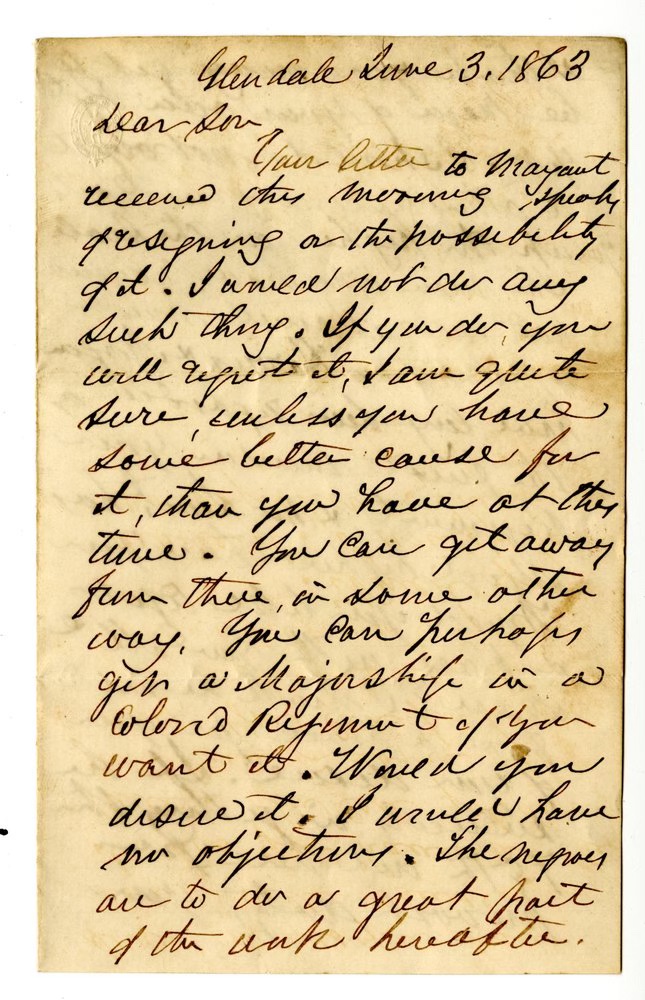
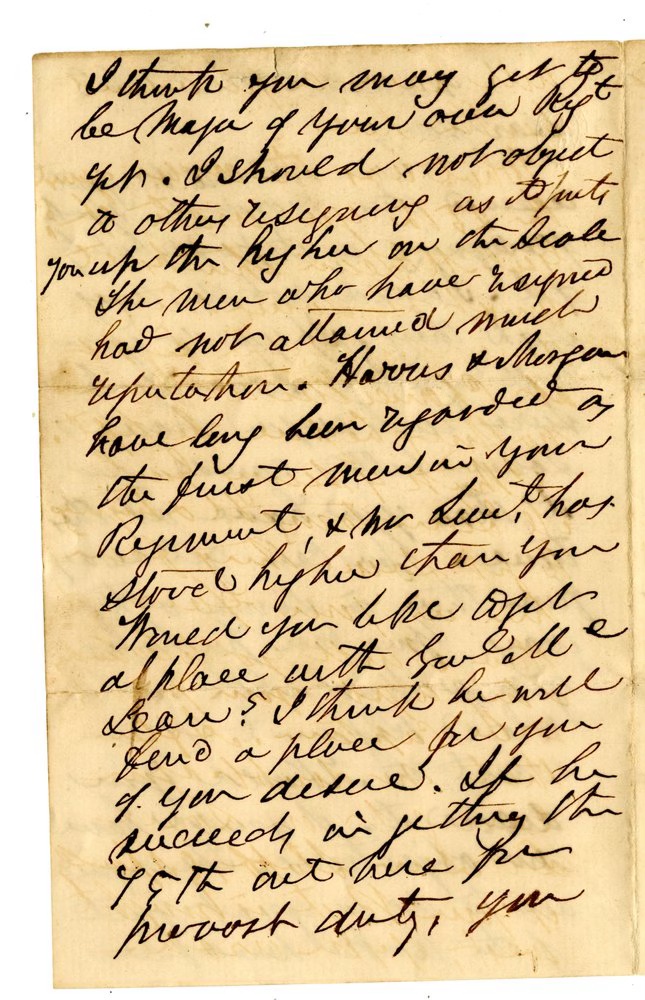
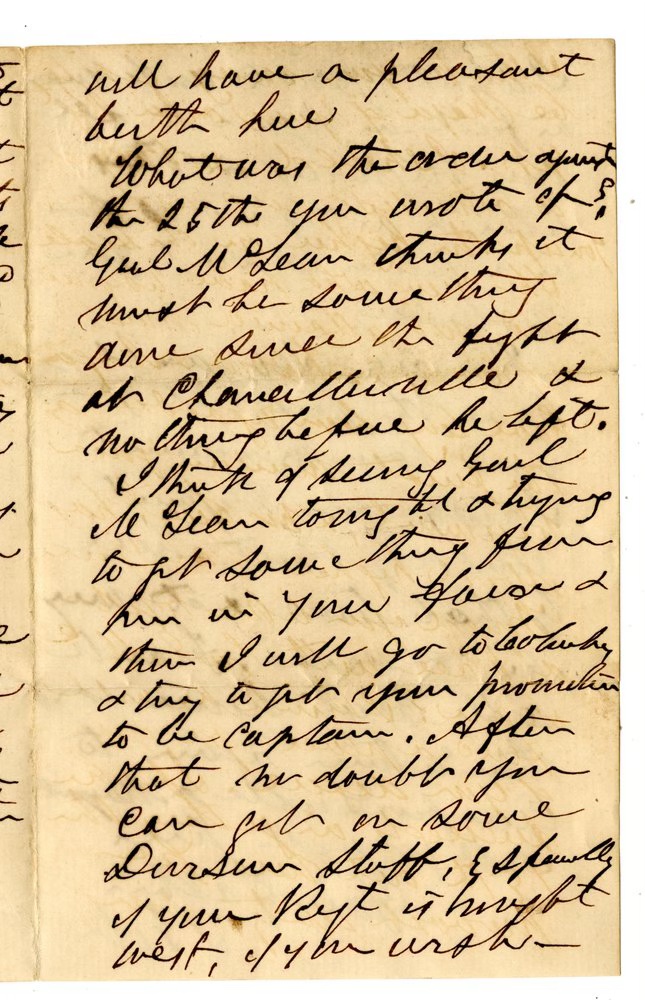
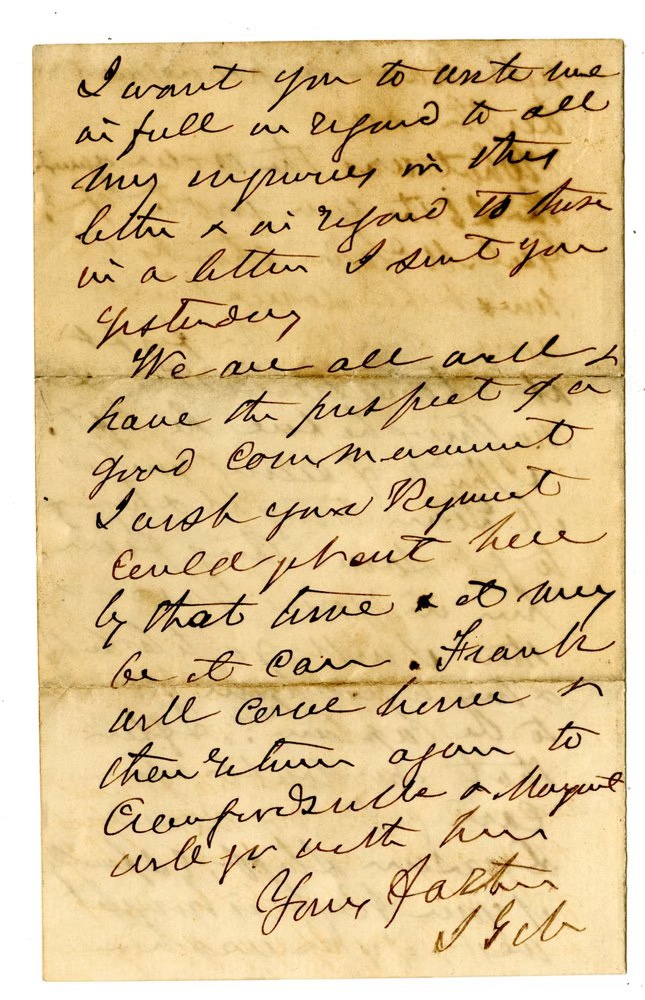
In a letter to his son Elias during the Civil War, Joseph discouraged him from resigning and suggested that he might obtain a majorship in a Black regiment. Joseph wrote that Black soldiers were going to do a large share of the work ahead. The letter provides direct evidence of Joseph engaging the expanding role of Black military service during emancipation.
“You can perhaps get a Majorship in a colored Regiment if you want it.”
Joseph Glass Monfort to Elias Riggs Monfort, June 3, 1863
Manuscript credit: Hanover College Archives, Elias Riggs Monfort Papers. View the complete four-page letter →
Reproduced with permission of Hanover College. Credit: Hanover College Archives, Elias Riggs Monfort Papers.
July 6, 1863: News from Gettysburg
Three days after the Battle of Gettysburg, a Western Union telegram addressed to Rev. J. G. Monfort carried urgent news about his son Elias. Sent from Gettysburg on July 6, 1863 and signed by J. W. Monfort, the message reported that Elias had been severely wounded and urged the family to come immediately.
The telegram adds a deeply personal dimension to the Monfort Civil War correspondence. Only a month earlier Joseph had been writing to Elias about remaining in military service and the possibility of a command in a Black regiment. By early July, the family was receiving emergency news from Gettysburg.
Source: Western Union telegram to Rev. J. G. Monfort from J. W. Monfort, July 6, 1863, Gettysburg. Hanover College Archives. The precise identity and relationship of the sender, J. W. Monfort, remain under review. View the telegram →
Evidence Boundary
Joseph Glass Monfort is documented as a Hamilton Presbyterian minister and as an important figure in the wider Presbyterian antislavery and publishing network. The current evidence does not establish that he personally operated an Underground Railroad station or directly transported or concealed freedom seekers.